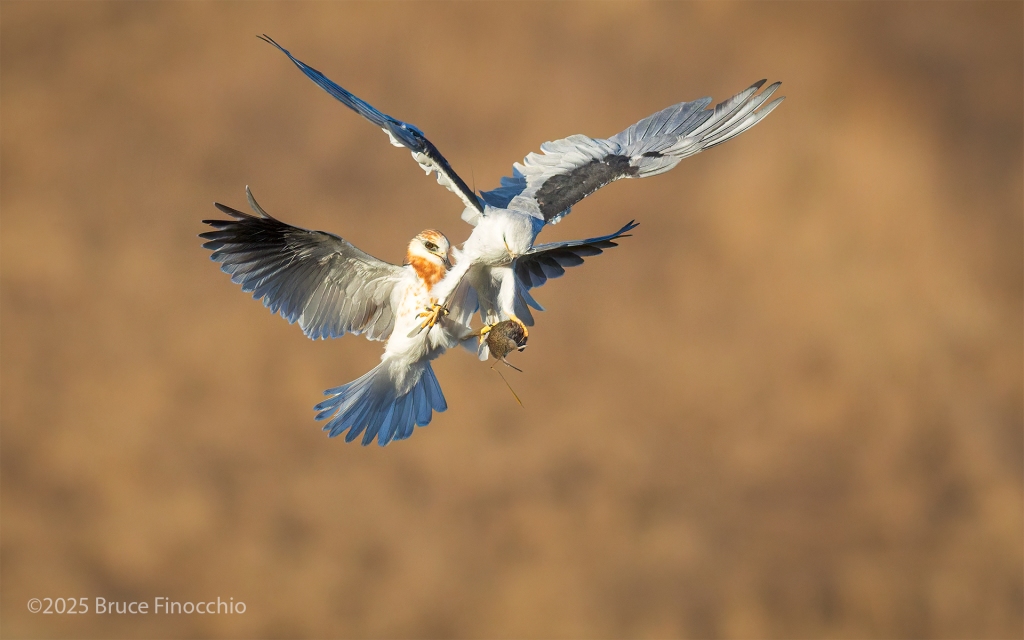
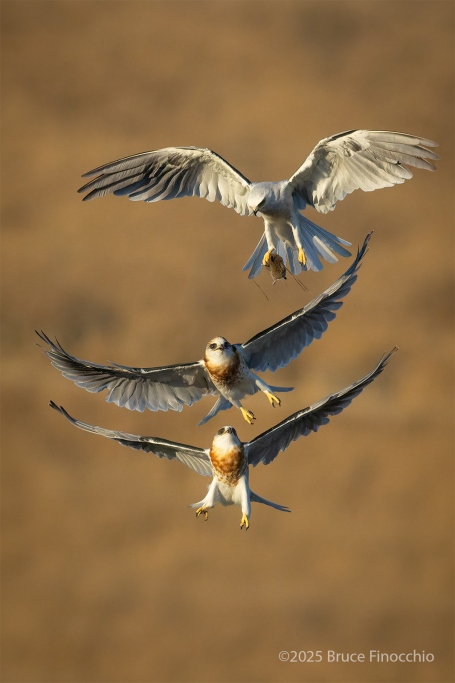
Juvenile White-tailed Kite Stretches Talon To Grab Vole From Parent
Subject: A Sacred Exchange in Nature
As I immerse myself in the ever-changing tapestry of nature, I am reminded of the profound connections that exist within the wild. Each moment captured through my lens is a doorway to the essence of life, inviting us to reconnect with the spirit of our Mother Earth.
Today, I am excited to share my latest piece, “Juvenile Kite Reaching Out For Vole In Exchange With Parent.” This artwork beautifully encapsulates the grace and action of a young kite in flight, embodying the delicate balance of life and the nurturing bonds that exist in the natural world. It serves as a poignant reminder of the sacred exchanges that occur daily, urging us to pause and appreciate the surrounding wonder.
In our fast-paced lives, it’s easy to overlook these fleeting moments. Through my photography, I strive to evoke that child-like sense of amazement, encouraging you to breathe deeply and truly see the world. Each piece is infused with love and respect for all living beings, aiming to stir your soul and inspire a sense of harmony and unity.
I invite you to explore this new artwork and let it resonate with your own experiences. May it remind you of the beauty that surrounds us and the importance of preserving these wild places for future generations.
Thank you for being a part of this journey with me. Your support nurtures my passion and helps protect the sacredness of the life we all cherish.
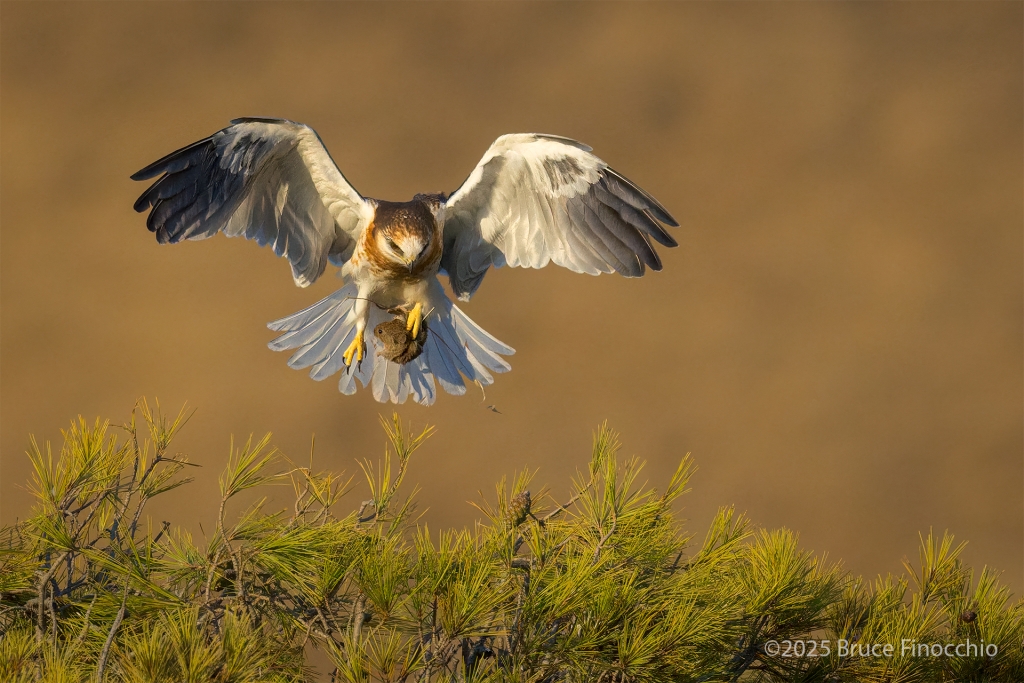
A Juvenile White-tailed Kite With Vole In Claw Brings It To The Nest To Feed
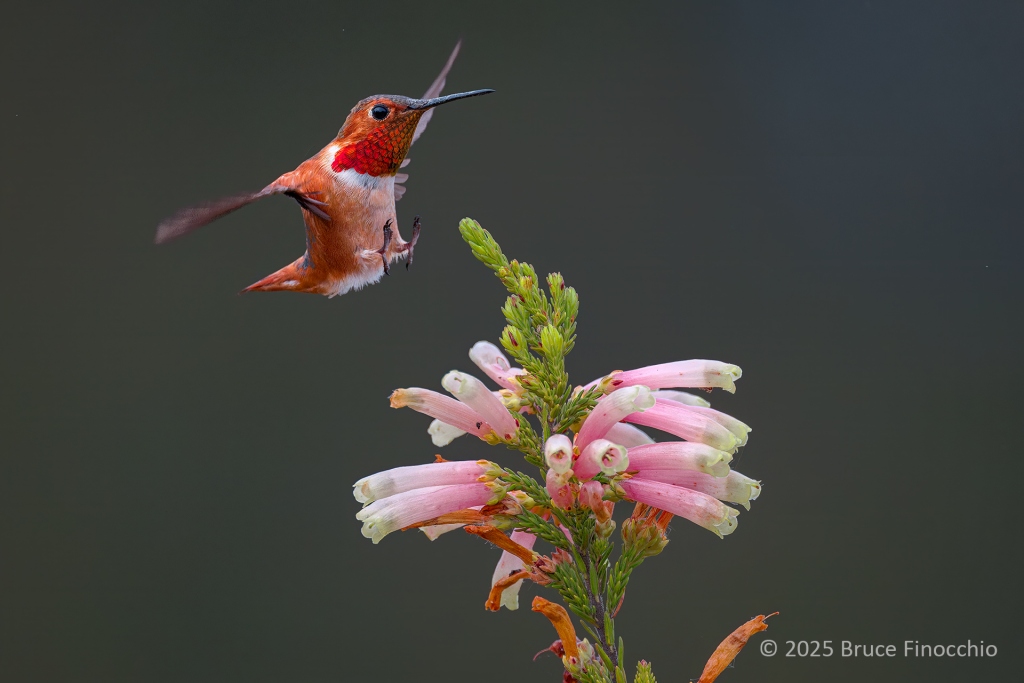
With Wings Back And Feet Out, Male Allen's Hummingbird Prepares To Land On A Cape Heath Blossom
The Delicate Dance of Male Allen’s Hummingbirds
In the delicate dance of nature, few moments capture the essence of beauty quite like the fleeting presence of a hummingbird in flight. With its iridescent feathers and rapid wingbeats, this enchanting creature embodies the spirit of wonder that I strive to share through my work at Dream Catcher Images.
As I gazed upon this vibrant scene—a hummingbird gracefully landing on a cluster of soft pink flowers—I felt a profound connection to the sacredness of life. Each detail, from the intricate cape heath petals to the shimmering gorget plumage, tells a story of harmony and balance in the natural world. It’s a reminder that beauty often lives in the simplest of moments, waiting for us to pause and appreciate it, even if it happens in the blink of an eye.
In capturing this image, I aimed to open a doorway for you, the viewer, to experience that child-like wonderment I hold dear. The hummingbird symbolizes joy and resilience and invites us to reconnect with our spirits and the earth that nurtures us. It flits from flower to flower, a living testament to the interconnectedness of all living beings.
As you take in this moment, I encourage you to reflect on the sacredness surrounding us. Each encounter with nature is unique, a fleeting glimpse into the mystery of life. Let this image stir your soul and inspire a belief in preserving our wild places and the creatures that inhabit them.
As another Earth Day passes, let’s celebrate the beauty of our world and the pivotal moments that remind us of our place within it. Embrace the magic, and may it lead you to a deeper understanding of the harmony that exists in nature and within ourselves.
In addition, I have included other hummingbird images taken at the UCSC Arboretum as a collage to highlight how each moment of life is so special and unique.
Among White Moth Wings, A Pacific Gopher Snake Drinks From A Small Pond
Among White Moth Wings, A Pacific Gopher Snake Drinks From A Small Pond
IMAGE STORY:
I just got home from the ranch on Monday night. When leaving, I returned to my blinds and main pond to reset my camera trap. Compared to Saturday and Sunday, Monday warmed up. Thus, I thought the hot Monday afternoon would be a good time to see a snake drinking at my pond. It happens a lot in hot weather. Just after this thought, when I turned the corner and could see the pond. Lo-and-behold, a snake was drinking at my pond.
I have been an empath all during my life. I think about something naturally, especially sports and baseball games. Other natural thoughts, not forced, come true. It is a lot like seeing the future or thinking about what will happen, and it does.
As a result, I don’t believe that time is linear. It’s more like a river with eddies, backwashes, and bends upon itself. Some would think this is baffling and crazy, but I can go back years to events where this happens. The latest is the snake. At first, I thought it was a rattlesnake, but I didn’t really look at it. I went straight down to my truck, got my camera and 100 – 400 mm lens, and went back up, and it was still there drinking.
I photographed it lying down on the ground after moving around a bit. If I made a little noise, the snake would raise its head into the air and flick out its tongue to sense if there was any danger. It did this twice. I felt it was very thirsty. Snakes really bury their heads in the water when they drink. I have seen this before; it’s fascinating stuff. I think I took 1200 images in about ten minutes.
By the way, it was not a rattlesnake but a large gopher snake.
Please let me know if you want to join me in photographing birds and other animals visiting my ranch ponds this fall. I still have openings for the fall session, mid-September to mid-October.
If you want to join my nature photography community or view more of my imagery, please check out my website, dreamcatcherimages.net. Fill out the contact form on the right sidebar.
Beautiful metal prints, 24 x 16, are available for this wonderful image; traditional prints as well, contact, bruce@dreamcatcherimage.net
From A Small Pond, California Gopher Snake Submerges Head To Drink Water
Portrait Of A Juvenile Bald Eagle Using Talon To Scratch Its Chin
Goal:
What’s the back story? What is the lesson learned?
For the past five years, a pair of Bald Eagles have nested in the Redwood Tree in front of Curtner Elementary School in Milpitas, California. At the school, there are three large Redwood Trees. The tall middle one is the nest three-quarters the way up. Over the years, they have built a large platform of sticks a top of some of the side branches.
First, it was Junior. Then, as the pandemic hit came Covid and Corona. Last year, they raised Pfizer, and this year this juvenile bald eagle is called Booster. There is a Facebook page dedicated to these eagles. Photographers come from all parts of California to photograph these eaglets.
Back of the school is some water treatment ponds that attract Black-crowned Night Herons, Snowy Egrets, Canadian Gooses, and an assortment of ducks. Northern Rough-winged Swallows also breed around these ponds. Near the school side is a boundary where two levies separate the treatment ponds from the school’s sports fields. Between the levy is a canal, a marshy wetlands area, and probably a former river that drains into San Francisco Bay.
A bridge crosses over the canal and goes to the levy on the other side, providing access to the water treatment ponds. There are several eucalyptus trees around the ponds, so the eagles favorite these trees, so they can watch the activity and occasionally take a fish out of the pond. They also hunt California Ground Squirrels on the levies around this area.
Now that she fledged and is flying, Booster spends a lot of time around these settlement ponds. One morning, I was across the bridge photographing Booster down by the pond’s edge. When Booster took off, she landed on the bridge. Then, this curious and adventurous eagle hopped up and flew to the bridge railing.
Here I was blocked from crossing back over the bridge and, most notably, on the wrong side of light. I was stuck on the ugly backlit side. There are fences along the levies, and the bridge is the only direct way across. A photographer on the same side as me took off and circled the ponds into the neighborhood. She went around the ball fields and the tennis courts at the back of the elementary school. She eventually returned to the bridge’s other side and began photographing Booster with the nice 9:00 am light behind her.
I stayed and tried to make a good outcome from a bad lighting situation. From my first position, I had some green deciduous leaves reflecting light off their waxy surface. With my 600 mm lens, I had these ugly shining green and white unfocused rings in my background. I didn’t want to put the blue sky behind the eagle if possible. Then, I noticed next to these green leave deciduous trees were a group of some fir or pine. I moved to my left a few steps, and these ugly green and white rings disappeared. My background was now a smooth forest green, not harsh, and with no distractions.
Now I was ready. Booster didn’t disappoint. She started scratching its chin with her mighty talon. I captured the behavior that was my goal.
Booster rolled back its nictating membrane to protect its eye and sight. This image captured the movement of the nictating membrane covering the eye. However, the nictating membrane wasn’t opaque as you usually see it.
I took hundreds of images as Booster was scratching her eye, with many horizontal frames and some verticals. I also used some exposure compensation to tone down some bright rim light from the backlight.
I created an exciting nature story image by standing put and making the best of a bad lighting situation. The moral of my story is that my friend did not see Booster scratching her chin with her talon because by the time she got to the other side of the bridge. Booster had stopped this activity; she missed this behavior. My patience and perseverance paid off.
Equipment:
Canon 5D camera body, with a 600 mm f4.0 IS lens and a 1.4x III teleconverter, at ISO 2500, 1/1600 sec at f5.6, Evaluative Metering, Aperture Priority, on a 1325G Gitzo trip using a Wimberley Tripod II
Technical Information:
Using the above tripod, selected Canon’s CR3 raw file format, using Canon’s animal eye-tracking autofocusing. And with Case #2, the autofocus tracking sensitivity is set at zero, with Accel./Decel set to minus one.
Processing:
I selected the 5 x 4 framing to eliminate extra space on the left side of the image and better balance the subject within the frame. I used digital dodging techniques to reduce the bright rim highlight areas on the head feathers and the talon’s bright edges. I used my standard Topaz DeNoise application set on the motion blur mode; applied one of Topaz sharpening modes on a different Photoshop layer, masking the background or the subject as appropriate.
Bald Eagles and Ospreys are making a comeback around the San Francisco Bay. Recent environmental regulations, the 1960s movement to “Save The Bay”, and the ending of DDT and other pesticides have made an impact. They are now fish, particularly Striped Bass in the Bay, for these raptors to feed on. The parents also bring them ducks and other waterfowl, and ground squirrels that inhabit the canals around the south bay.
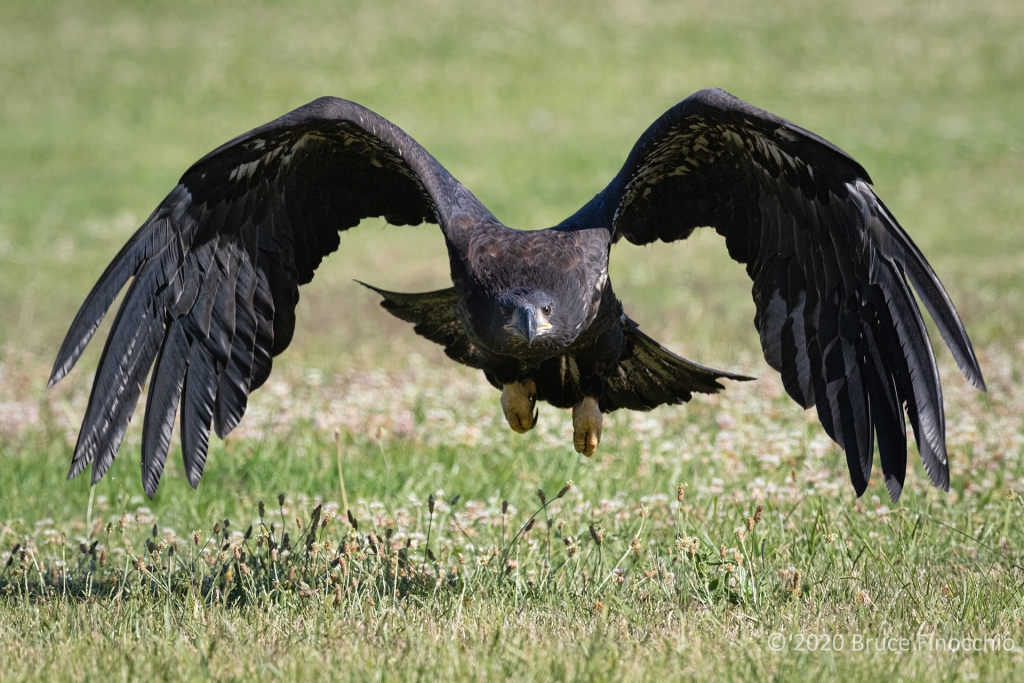
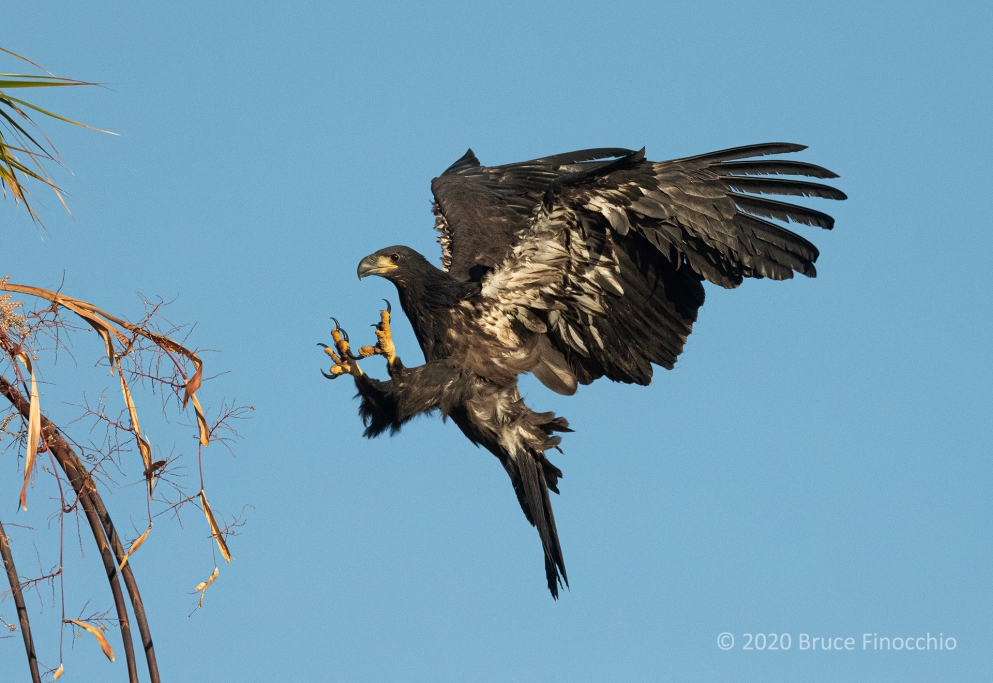
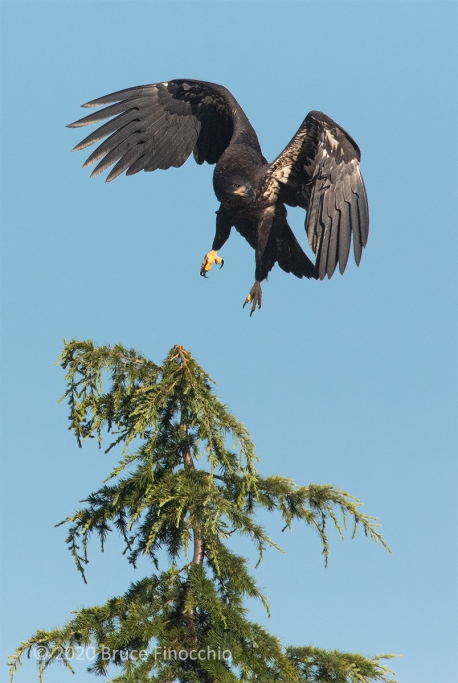
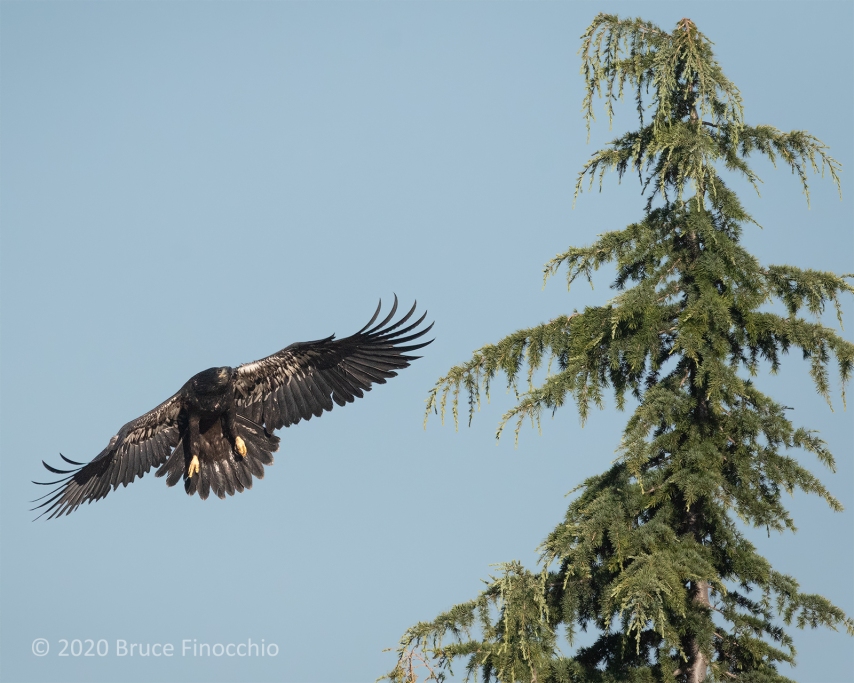
My goal was to capture a recently fledged Bald Eagle in flight. This juvenile eagle was born this year with another chick in a nest in a large redwood tree. This was the fourth year that the parents had nested in this redwood tree. The nest is in a grove of redwood trees in front of the Curtner Elementary School in Milpitas, CA. This location is on the southeastern side of San Francisco Bay.
There were 50 photographers around the July 4th weekend. However, it pays to get there early. I have been getting up at 4:30 AM to be at the location at 6:00 AM. Few photographers were this early.
This morning, the juvenile, named “CORONA” or its sister named “COVID” circled the nest and the group of redwood trees. The first pass was just before the rising sun hit high up on the top branches. These images lack life and the eagle subject was dark. During the second pass around the trees, the first rays of light hit this juvenile bald eagle. The light changed this fast, fast as it took time for another circle. I got the forward circular thrust of the wings, the call and cry of the juvenile, and just a touch of the first rays of sunlight!
Many of us have been going to this location for a few years. The comradery, the getting to know each other better, have filled in the boredom of waiting for the parents to come back with food for these juveniles. We wear our masks and practice social distancing. Sometimes it’s hard to hear each other through the masks. It’s something we all have gotten used to in the world of Covid-19.
We have a lot of feelings for these two sisters’ bald eagles: Covid and Corona. It seems they might make it on their own. I haven’t been there since Friday, because they are ranging farther afield and the photographic opportunities are less and less, as they move away from the safety of the nest. I might check in there tomorrow morning and see how they are doing. It was incredible to see them soar for the first time; they used the thermals to go high into the sky. These juvenile bald eagles just need to learn to hunt on their own, and they too like their parents can grace the skies of the south bay.
Lessons Relearned:
1) It was hard tracking the eagles, even though they are big birds. I relearned that I need to make sure my lens’ distance focusing range setting was set to the “distance” setting of 16 mm to infinity, for focusing farther away. Limiting the focusing range was key to locking focus on the flying eagles. This way my camera did not have to go through the whole focusing range of the lens and “hunt” for the subject.
If I am in a blind shooting birds at close distances, then I set my focusing range on my telephoto lens to the minimum range of 5.5 meters to 16.2 meters (For A Canon 600 mm f4.0 IS lens). I adjust the focusing range depending on the photographic situation and how far my subjects will be from me. For the eagles flying at distance, I set the lens focusing range to 16.2 meters to Infinity. My auto-focusing tracking was much better, and I was more able to stay focused on the eagles in flight.
2) I also change my focusing setting in my Canon 7D Mark II camera body, specifically the AF tracking and locking on the subject settings after purchasing Glen Bartley’s 7D Mark II guide. With these new settings, my focusing locks on better and gains focus quicker. Therefore, more quality keepers. These are the settings he recommends for the Canon 7D Mark II. Yet the principals apply to other Canon models and other manufacturers’ camera bodies.
a) Tracking Sensitivity: If the AF point is tracking one subject and see another, how will it respond to the new subject? It’s best to stay “locked on”, set tracking sensitivity to “-1” or “-2”.
b) Accelerating/Decelerating Tracking: Set to “0” for steadily moving subjects. Set to “1” or “2” for subjects that have more stop-start characteristics.
c) AF Point auto-switching: How fast does the camera switch from one point to another point as the subject moves around the frame? If using over one point like Zone AF or Expand AF, for Birds in Flight, it’s best to lock early on the subject and hold focus as the bird approaches, set to “0” or “1” if using Expand AF area with 4 points. For small birds with erratic flight, using Expand AF area with 9 points, use a setting of “2”. So, if the camera’s focus loses one point, the AF focusing can switch to another point easily. *
3) Getting up early and seeing this gorgeous early morning light jogged my memory and brought home the realization that low angled early morning and late evening light is sweet light. This light can make an image glow with beauty. Being a primary factor and the difference between a good image and a great one. As a night person, I am discovering the treasures of getting up early!
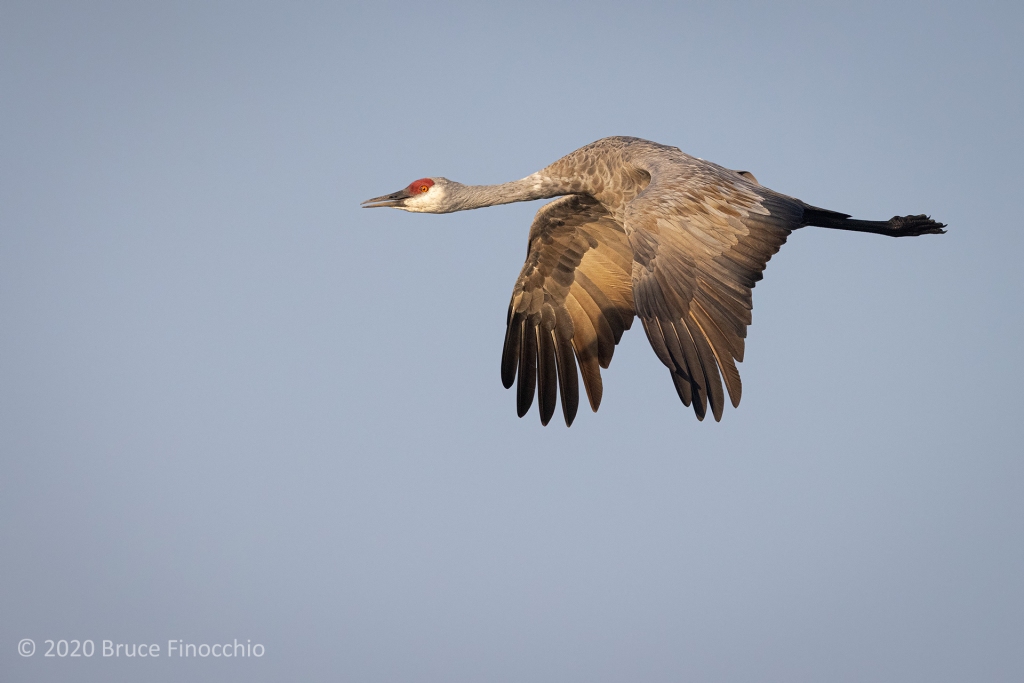
One of the most primal sounds in nature. Cranes calling out as they fly overhead. Their sounds strike something deep in your being and essence, resonating and stirring your soul. I went to Merced National Wildlife Refuge several times during the months of January and February. Every time I hear their plaintive call, I am struck by how their sound affects me. How much more I feel connected to them, to the earth, and to the web of life.
Crane species all over the world are critically endangered. Please let us take care of their wetland habitats, so we never lose their primal call, so their calls will still reverberate within our beings. If we don’t, we will have lost something special and diminish our connection to the natural world. I hope this image brings back to your memory their mystic and plaintive sounds.
I had a very unsuccessful day, this past Monday, for I didn’t get any photographs of the Channel Island foxes. I spent 3 ½ hours walking up and down Santa Cruz Island carrying my camera equipment, over 18,000 steps on my Fitbit Blaze watch, that’s over 7 ½ miles. No photos, and only one sighting 10 minutes before the boat left! Therefore, I drove the long 4 hours back to my ranch, feeling very tired and mentally depress with extremely sore leg muscles.
The next day, stiff and sore, I spend time cleaning out my ponds from last winter’s debris. The cabin pond was clean now and filled up with fresh water. At the end of the afternoon, I decided what the heck, I’ll photograph. Postponing the many chores, I need to complete before I left the ranch and headed home.
At the end of the day, as the sun had set behind the mountains, sitting in my blind, the male and female Western Bluebirds came into the pond and bathed. It was as if they were thanking me with providing them with clean fresh water, and offering their bathing activities as a great opportunity to photograph them. They seem to know that I was feeling a little blue and down, having missed capturing images of the Channel Island foxes.
They brighten and uplifted my spirit, and left me very humbled. This image is one I captured of the male bluebird, expressing his joy by cleaning his bright blue feathers, spraying water everywhere. The Ramrod Ranch always delights me and continues to provide wondrous wildlife moments. I love the place because of moments like this!
Female Western Bluebird Pause In Her Bathing As The Last Sun’s Rays Light The Water Gold
I was late… Sunday at the Post Office, there was even a line at the self-service postage machine as I tried to mail out my Costa Rica Hummingbird calendars to my nieces. This put me behind schedule and meant that there was not much light left in the day to get from the East Bay to Coyote Point. When I got there after 4:00 PM, I found that it was extremely low tide. I was initially disappointed because there was no water for ducks or shorebirds.
Knowing I only had about 45 minutes of beautiful light at best, I let go of my feelings of disappointment and just decide to see what nature had to offer. Out in the mudflats, there were two Snowy Egrets in the small ponds left by the receding tide. As I watched, I noticed that there were feeding, and in a fleeting moment, this Snowy Egret pulled a tube worm out of the mud from the bottom of one of these small ponds.
If I hadn’t set aside my preconceived thoughts of photographing ducks and shorebirds, I wouldn’t have been open to what nature had in store for me. I also could have taken one look and said to myself, nothing here, not much time left of extraordinary light, so I could have left and gone home.
If I did listen to all these voices of doubt, I would not have gotten this incredible image.
Saturday was a full day, and a productive day spent with a client at my beloved Ramrod Ranch. We photographed many bird species. The House Wrens nesting a knothole in the cabin particular provided lots of photo opportunities, as the parents brought in worms and spiders for the young ones who’s voices you could hear calling out for food.
Still, it was a long day, up before 5:00 am, and I was exhausted after the client left. I normally would work on my images from the day until 11:00 pm or so. However, I was so exhausted as the day turned to the night, that I just plopped down on my bed and went to sleep. I was too lazy and tired to even charge my sleep machine battery and went without.
All these factors contribute to a Sunday where I was still very tired. I wasn’t about to miss a morning shooting in my blind at the Upper Pond. However, during the morning in the blind, I kept nodding off. A couple of California Quail came up to the perches that surrounded the pond; it was their constant chuckling that woke me up.
The female and the male flew up to my raptor perch. I took several images of them both. The female quail stayed longer and started calling out. Photographically, I was having a hard time fitting her image into the frame. My 600 mm IS f4.0 lens is sometimes just too tight, and this was the case here.
Female California Quail Calls Out From Behind A Old And Gnarled Oak Branch
I had my 100—400 mm lens with me in the blind just for this case. As I took my camera body off the 600 mm lens, putting on the shorter lens, I looked up and saw that the female quail flew into the little blue oak tree that’s right behind the pond, and out of sight. My frustration was high, for it appeared that I changed the lens in vain, and for nothing.
With the 100—400 mm lens and camera on my lap as the minutes ticked by, I noticed a change in the quail’s chuckling coming from the little blue oak tree. It was different, and I was instantly alert. For these calls were their warning calls that a fox, bobcat, or some other predator was nearby. I had heard them many times before.
I looked out toward the brush line where the jeep road goes up the mountain and walking into my sight line appears a beautiful bobcat. For once I was prepared with the right lens, for all I had to do was raise the camera up from my lap. It has taken many years of coming close and many missed opportunities, I finally had my chance to capture a good image of Bobcat. I have seen them around the ranch many times over the years. My clients have got images of them from the same pond. Somehow my luck and fortune through the years weren’t good.
The bobcat might have come up to the pond to drink, like the Gray Foxes, have over the years. However, I think it heard the clicking from my camera shutter and after about thirty images it turn around and disappeared into the brush. For next time, I need to use the silent shooting mode that’s available on my Canon 7D Mark II camera body, for this mode really reduces the noise coming from closing and clicking the shutter. Then, I might get that coveted drinking image.
Bobbed Tail Up As Alert Bobcat Searches For Prey
The male and female quail were still giving their warning calls, so I knew that the bobcat was still around. After a few minutes, I looked up through what I call the breezeway towards the big metal water tank. There was the bobcat next to the tank sniffing the ladder I have there to check the water level in the tank. It was between the tank and the ladder. I took a few more images before it moved off into the thick brush. As the minutes passed, the quail stopped their warning calls; I knew that the bobcat was gone, and no longer in the immediate area.
Thrilling moments, after a lifetime of disappointment. This beautiful bobcat is now forever close to my heart. I will remember and cherish these moments, every time I look at these images. I am so happy and glad I awakened just in time!
Bobcat Peers Over The Wooden Ladder Step In Front Of The Water Tank
A Thirsty Young Gray Fox Laps Up Precious Water From A Small Pond
I just spent five fabulous days at my Ramrod Ranch, setting up my photo blinds for bird photography, adding new perches, and preparing backgrounds by clearing grass around the ponds.
Because of my serious back injury, there was a period of 767 days from early 2015 through early 2017 that I was unable to go to my sacred place. During this visit, I reconnect to this place again, emotionally and spiritually. These five days I soaked in all the bird life. I took moonlight walks each evening, hearing a Great Horned Owl hooting its deep voice on a nearby hill. Each day I was surprised by a special and rare bird species. First, it was a Yellow Warbler, then, a Nashville Warbler—my first real photographs of this bird. The next day a Sharp-shinned hawk came by the cabin pond searching for its next meal.
The third and four days a Pacific-sloped Flycatcher made an appearance. I love Flycatchers; they are very shy but I got some very good images with good backgrounds of this wary bird. It seemed to favor the five o’clock hour to make an evening show.
However, it was the fifth day and my last morning where up by the water tank and the large main pond that I was graced with a special visit by a Gray Fox. They are so beautiful. It was thirsty and ran around the pond just feet away from me. For once I was prepared by having my 100 – 400 mm lens ready so I could zoom back and forth, getting wide-angle full body shots as well as tight portraits. This moment lasted only a minute or so but was so wonderful it seemed to last much longer. It is also forever imprinted on the view screen of my mind.
A Portrait Of An Alert And Watchful Gray Fox
That’s not all, the Gray Fox, made a second appearance twenty minutes after the first, still thirsty. It drank again. The few quail around scattered deep into the brush. I was blessed and felt honored by sharing these few moments with this beautiful fox.
Water Drops From A Gray Fox’s Chin As It Raises Up From Drinking
Due to a recent cancellation, I have spaces available for the October 6 and 7th, if you would like to share nature with me, and take the journey to become a better nature photographer.
It’s an incredible experience to watch birdlife so close, behaving so naturally as if you aren’t even there. I have included a couple of images of this beautiful Gray Fox and one of the Pacific-sloped Flycatcher. If I can capture these images, it possible for you to do so too. Let me teach you how.
For more information and to register, follow this link to my signup page.