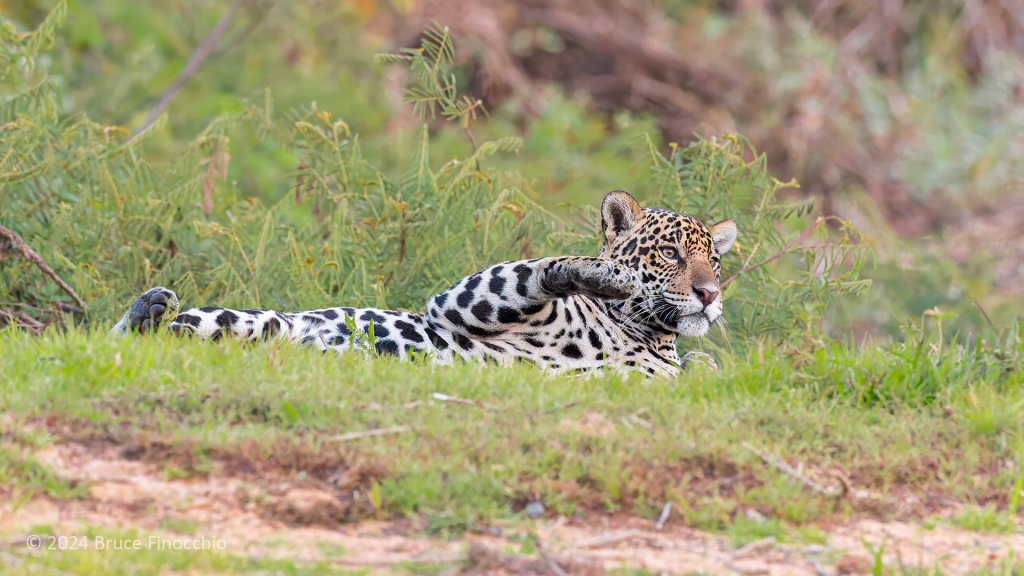
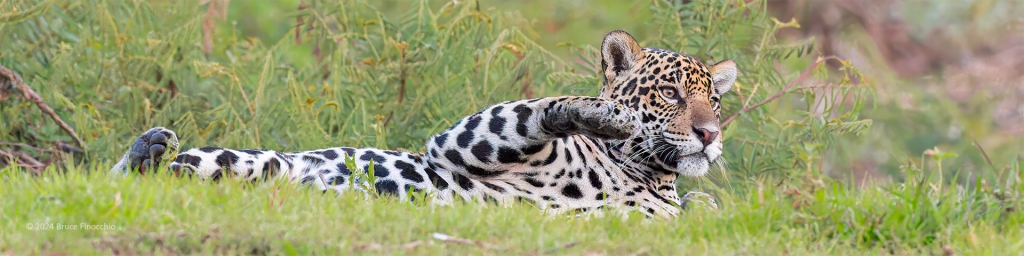
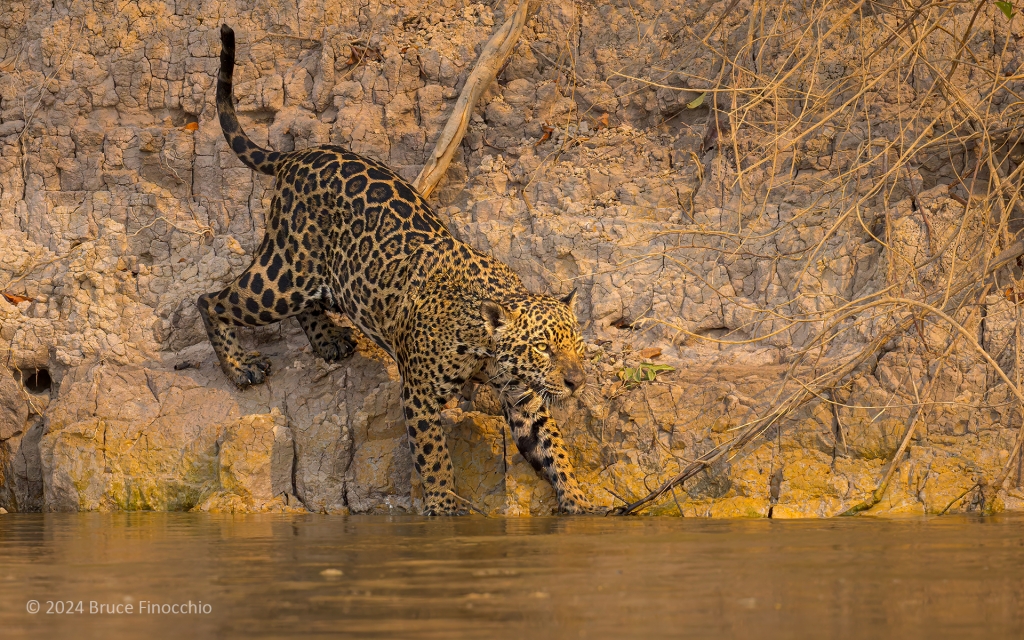
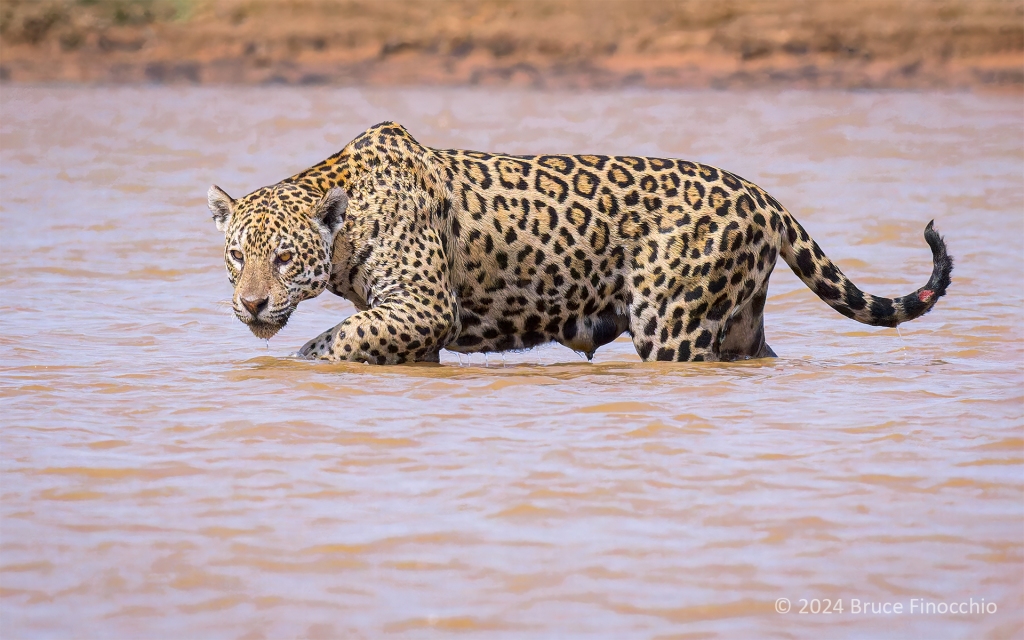
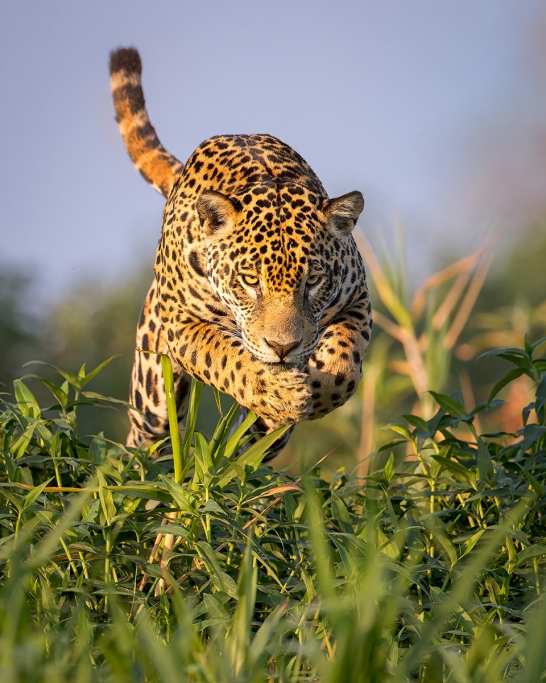
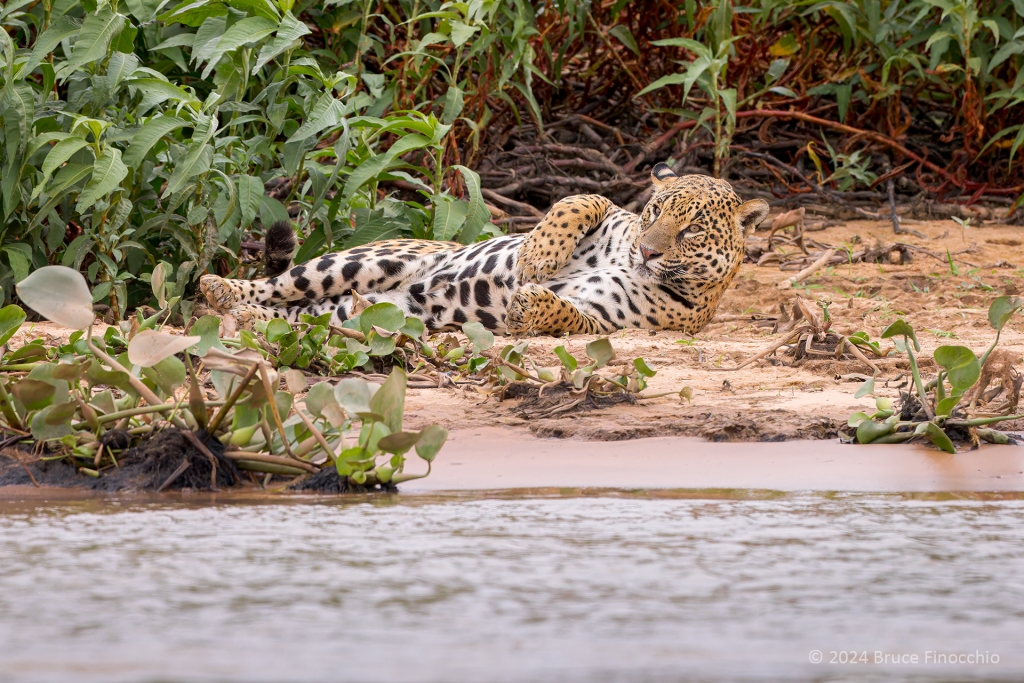
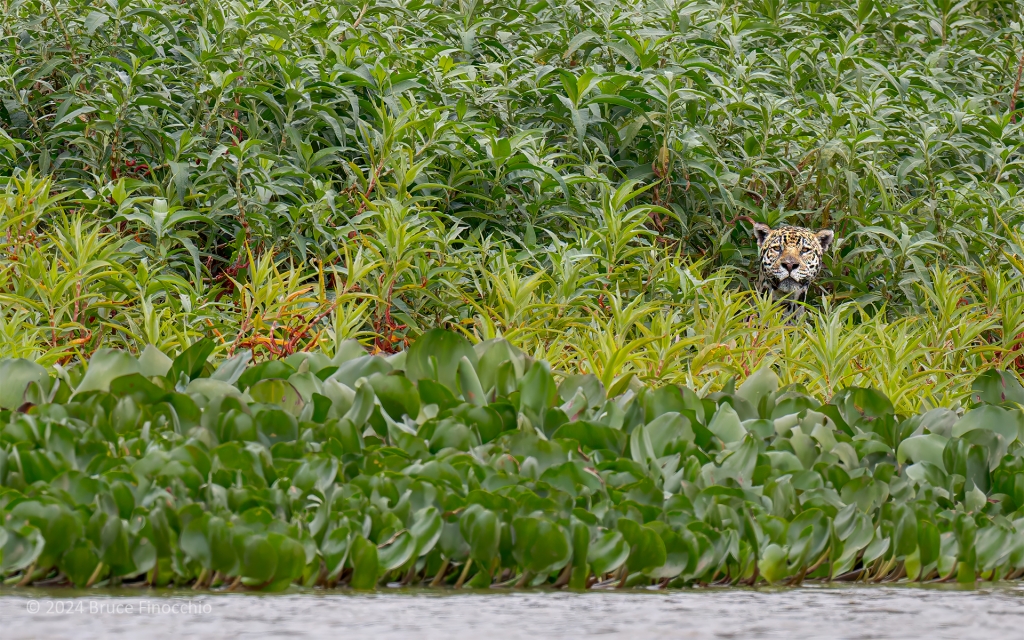
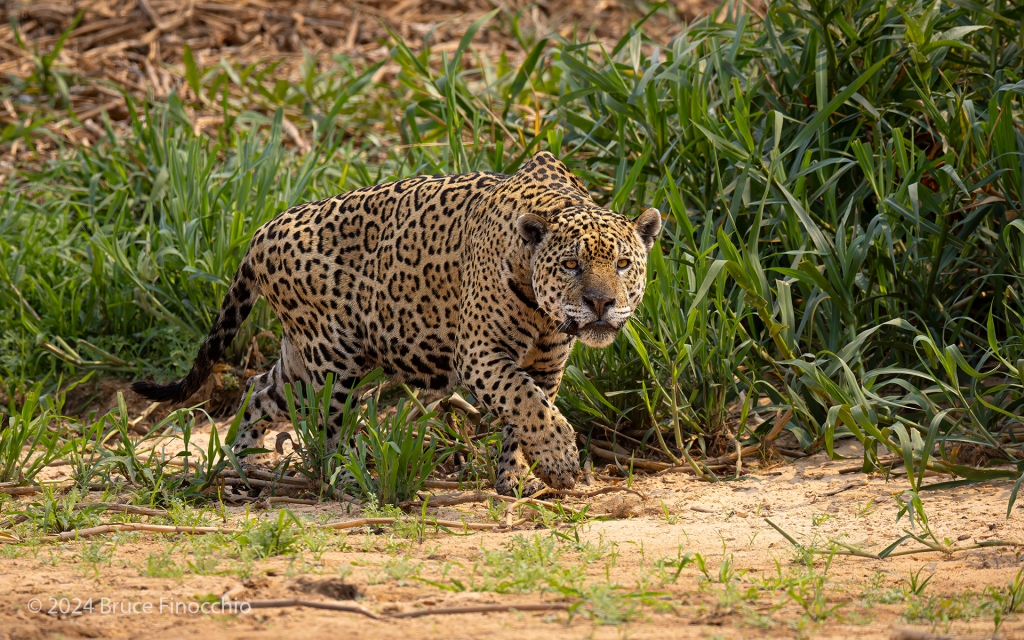
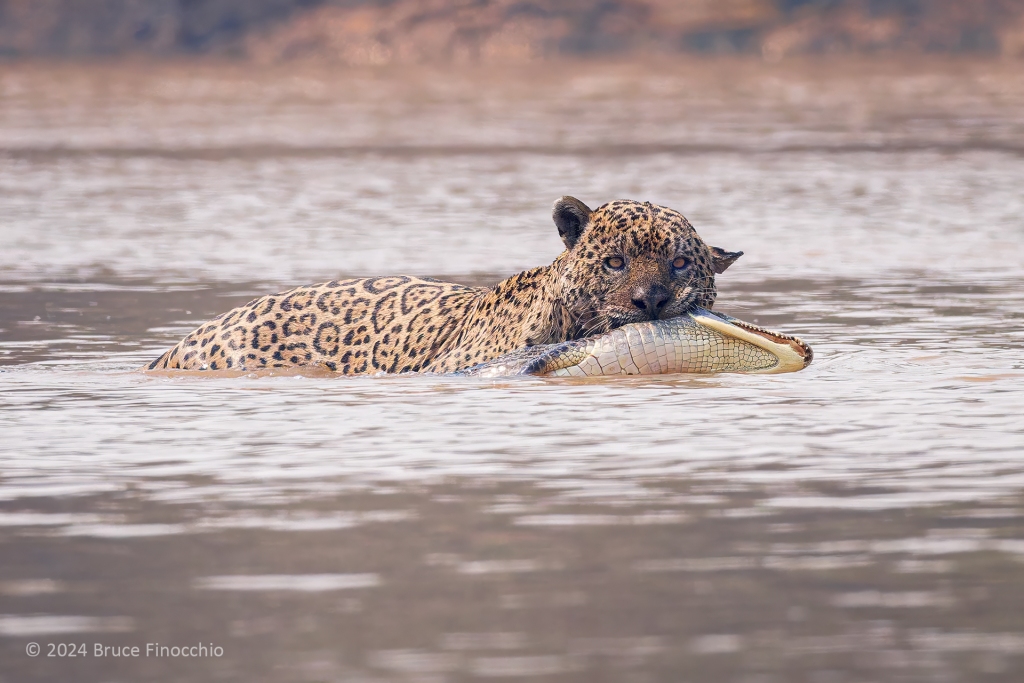
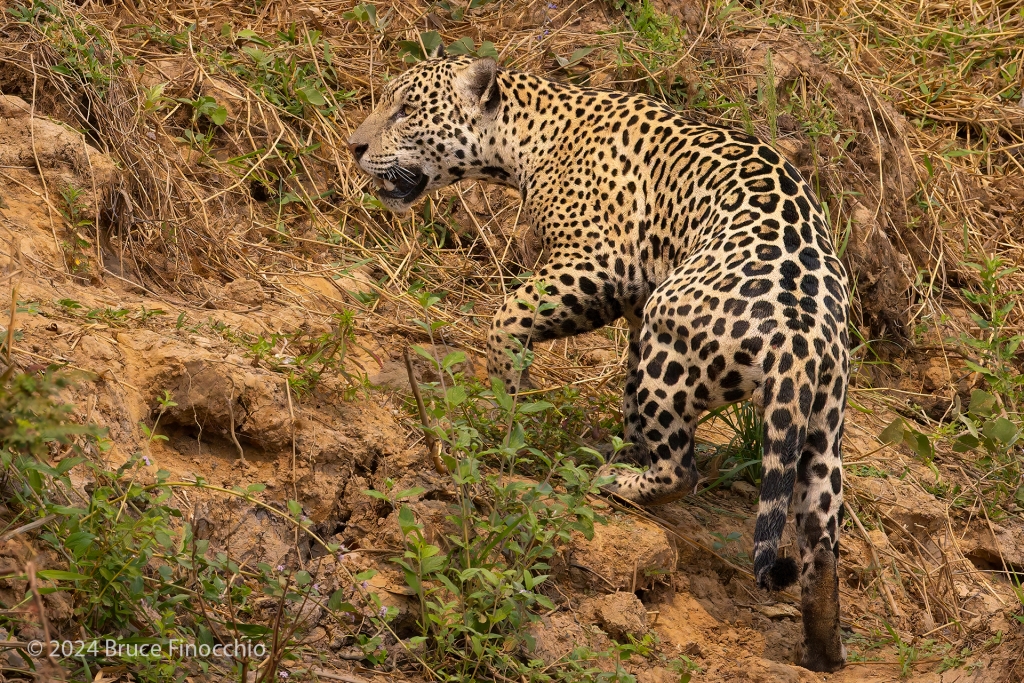
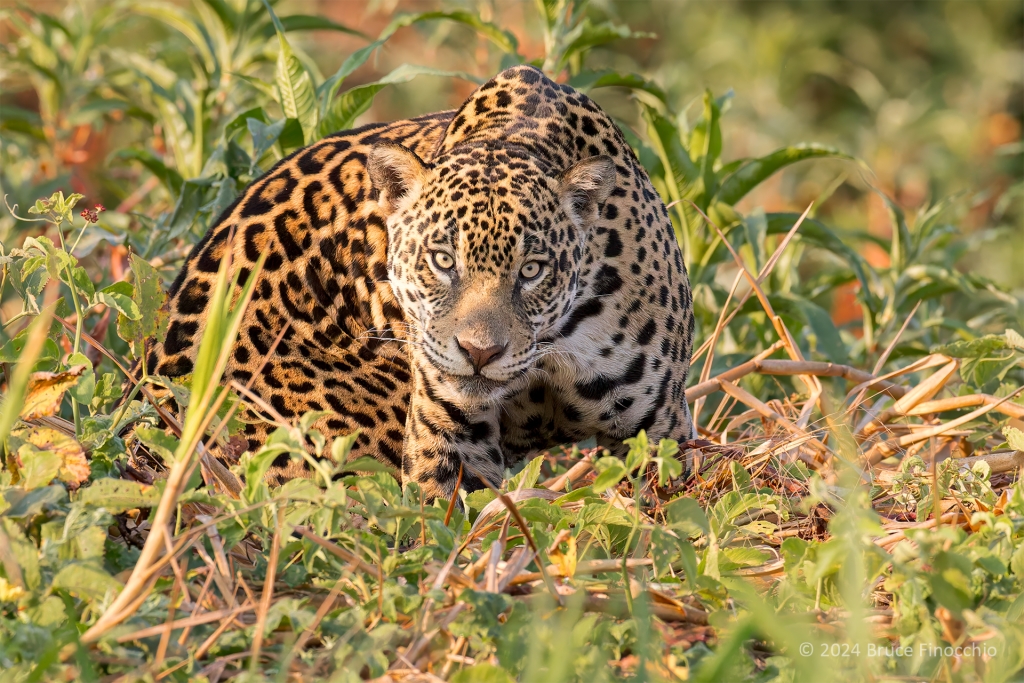
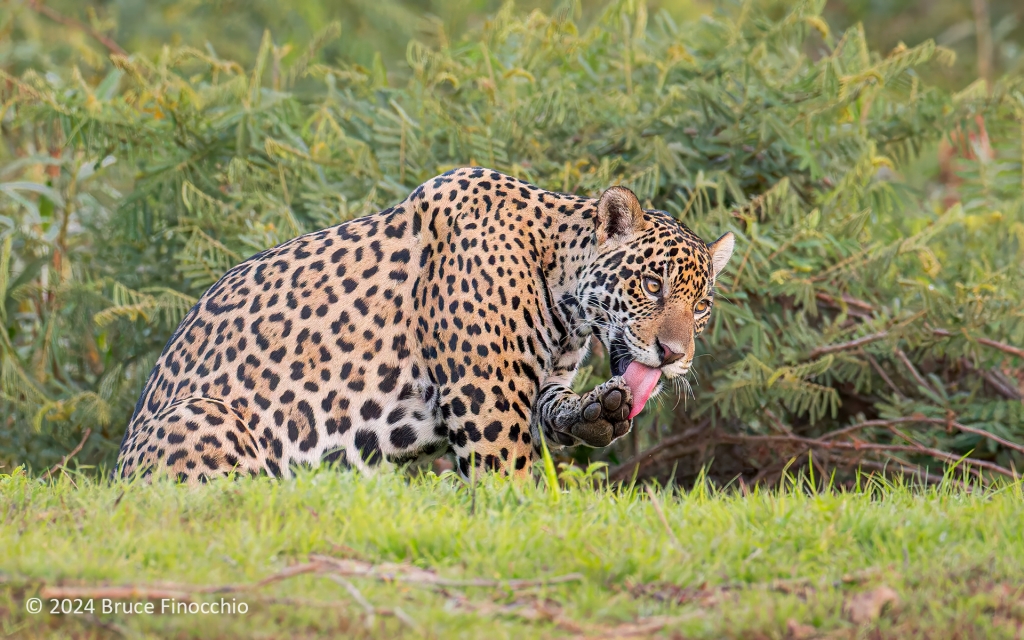
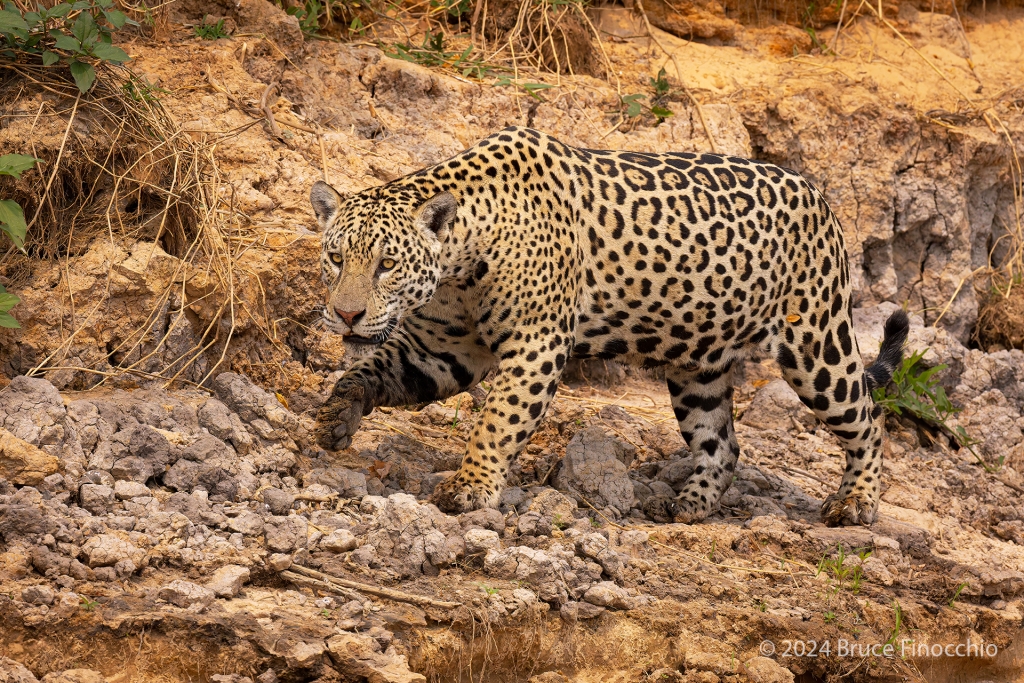
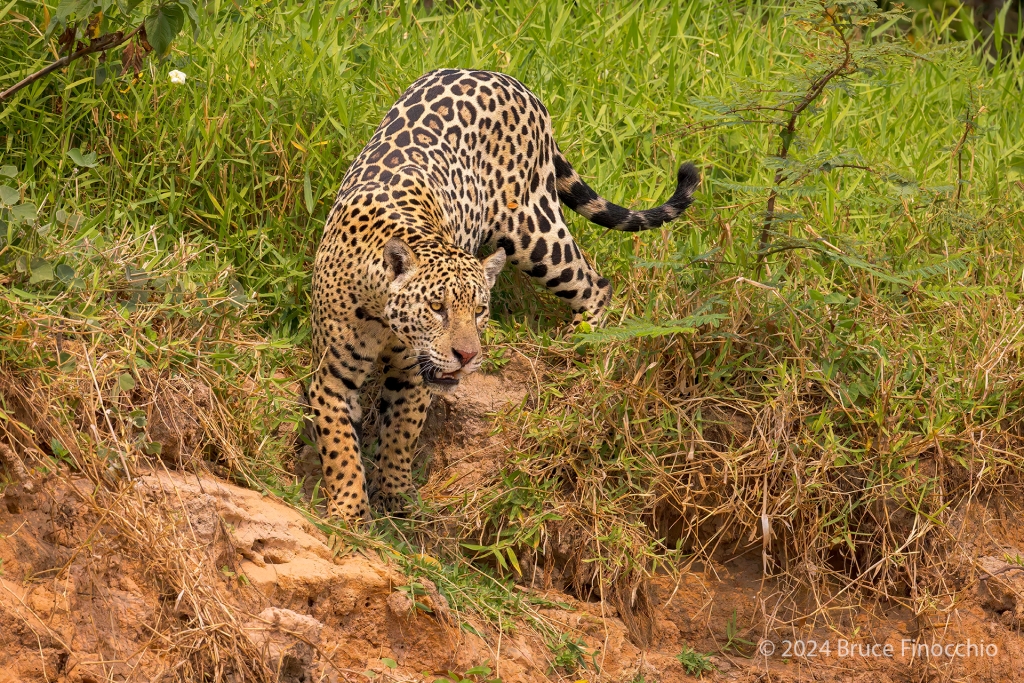
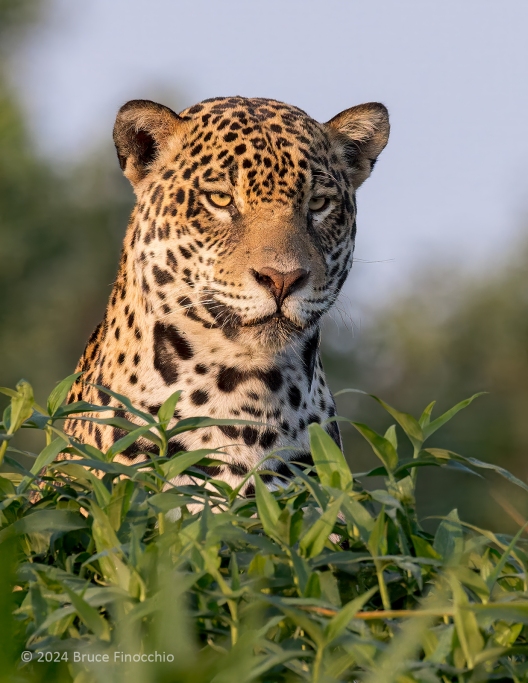
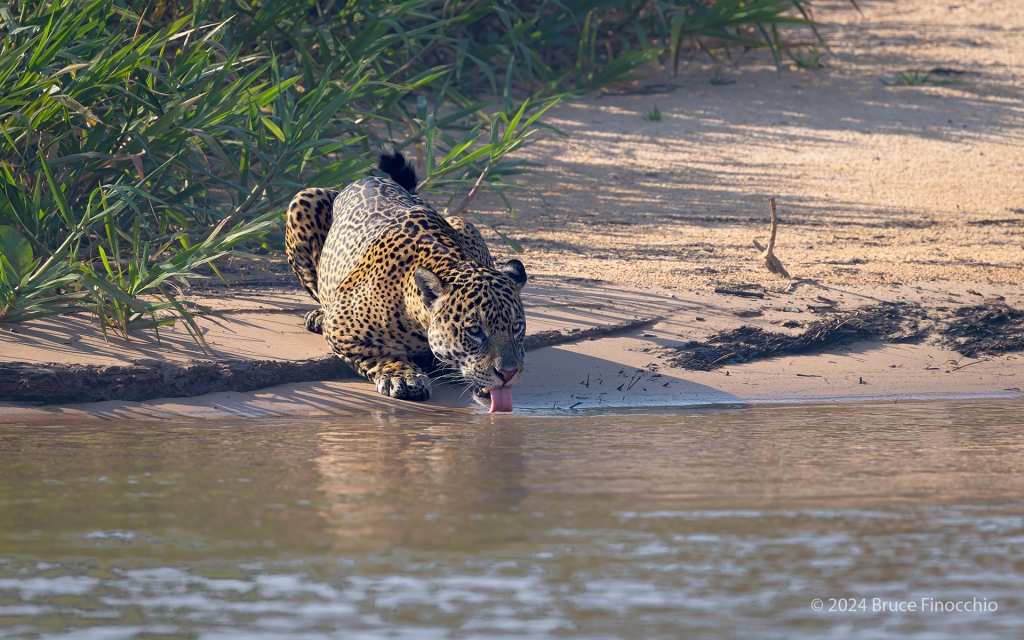
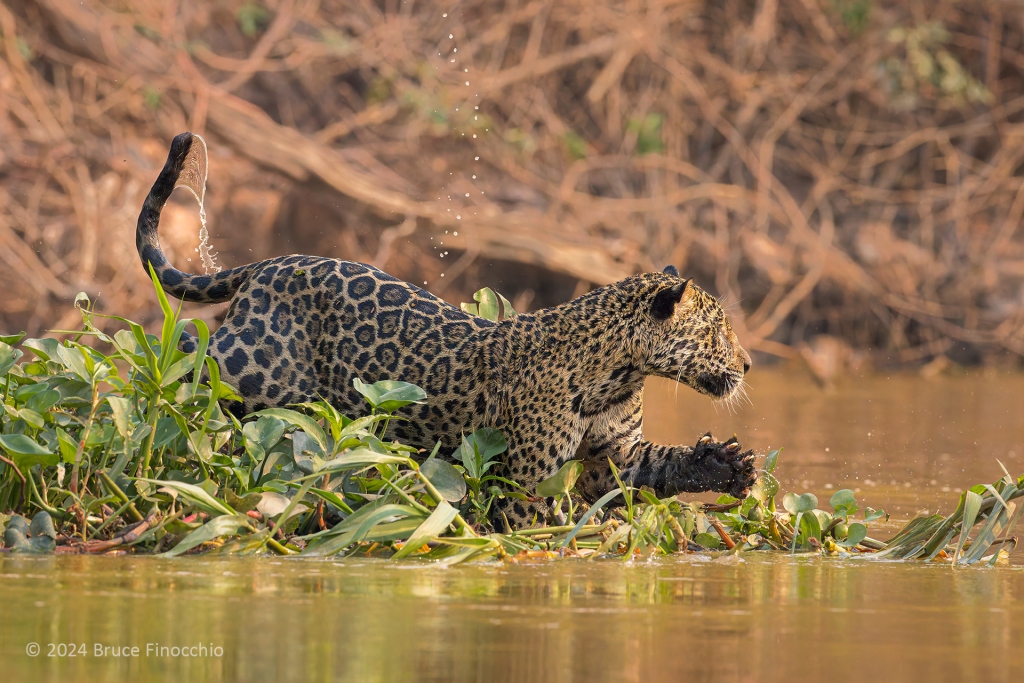
In the embrace of nature, where the vibrant greens of grass meet the fading light of a day’s end, a moment of pure magic unfolds. Here lies a female jaguar, alert and poised, her raised paw a testament to grace and strength. This captivating image invites us to pause, breathe, and reconnect with the sacred moments that nature so generously offers.
As I observe this magnificent creature, I am reminded of the delicate balance that sustains our ecosystems. The jaguar embodies the wild’s untamed spirit with its striking coat and watchful gaze. She rests not merely as a predator but as a guardian of her realm, reminding us of the importance of preserving these majestic beings and their habitats.
As an artist, I strive to open doorways to these enchanting experiences. Each photograph I capture is more than just an image; it’s a portal into the soul of nature. It beckons us to experience a child-like wonderment, to feel the pulse of life that courses through every blade of grass and every creature that roams the earth.
This alert yet serene jaguar embodies a moment of tranquility amidst the chaos of life. She invites us to reflect on our connection to the natural world. Are we taking the time to appreciate the beauty that surrounds us? Are we nurturing our spirit and allowing ourselves to be enveloped by the awe of existence?
Through my work at Dream Catcher Images, I aim to instill a sense of harmony and oneness with nature. Each click of the shutter reminds us we are all part of a more remarkable tapestry woven together by the threads of life. The sacredness of this moment, captured in time, serves as a gentle nudge to protect and cherish our wild places and the creatures that inhabit them.
Let this image of the alert female jaguar inspire you to seek out your sacred moments in nature. Embrace the stillness, listen to the whispers of the wild, and allow your spirit to reconnect with the earth. Together, we can foster a deeper appreciation for the beauty surrounding us and work towards preserving it for generations.
“To me, cruelty is the worst of human sins.” ~ Jane Goodall.
“Change happens by listening and then starting a dialogue with the people who are doing something you don’t believe is right.” ~ Jane Goodall.
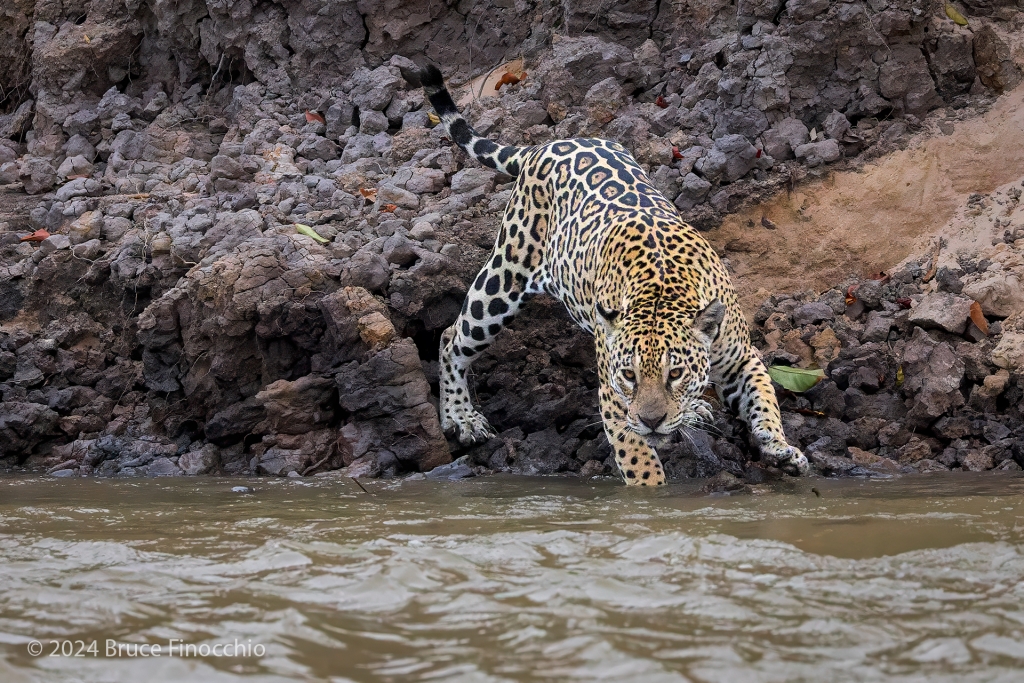
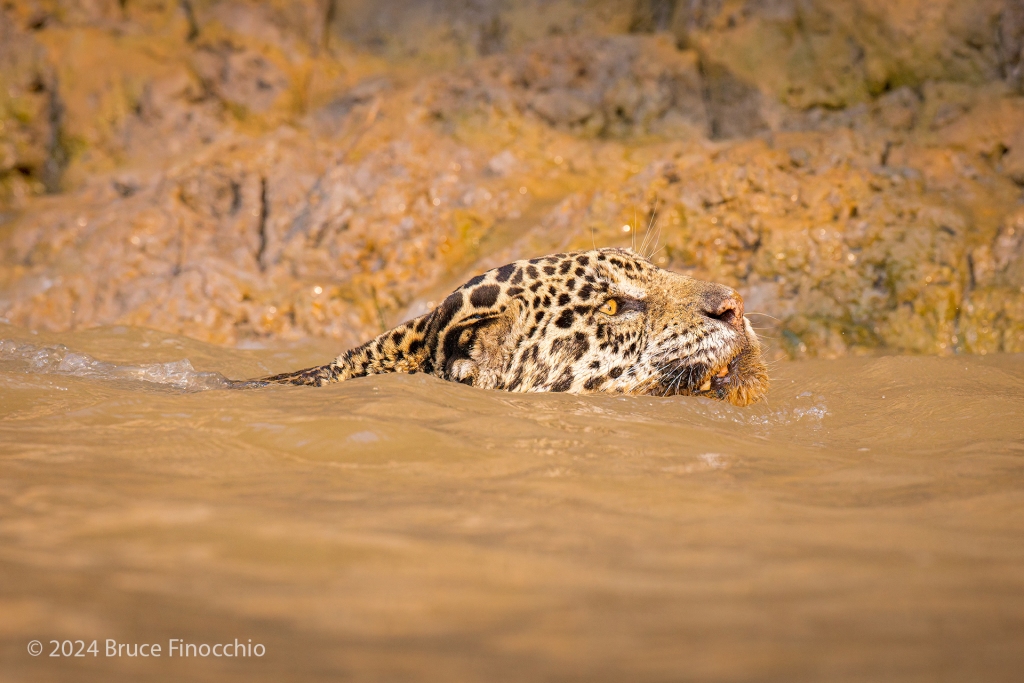
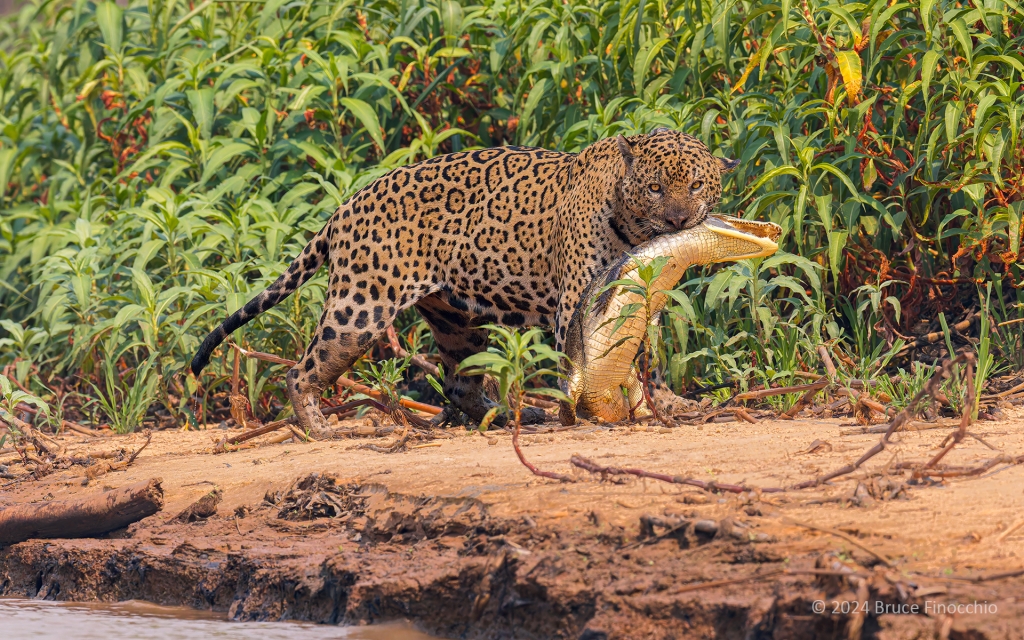
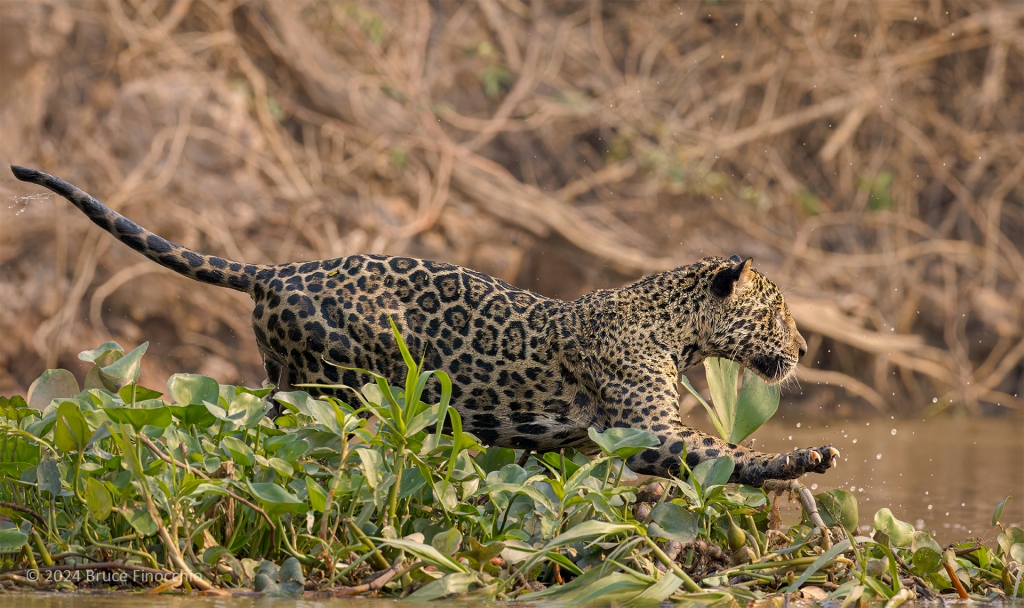
Pantanal’s August 2024 Jaguars
(To see larger images, click on one)
Among White Moth Wings, A Pacific Gopher Snake Drinks From A Small Pond
Among White Moth Wings, A Pacific Gopher Snake Drinks From A Small Pond
IMAGE STORY:
I just got home from the ranch on Monday night. When leaving, I returned to my blinds and main pond to reset my camera trap. Compared to Saturday and Sunday, Monday warmed up. Thus, I thought the hot Monday afternoon would be a good time to see a snake drinking at my pond. It happens a lot in hot weather. Just after this thought, when I turned the corner and could see the pond. Lo-and-behold, a snake was drinking at my pond.
I have been an empath all during my life. I think about something naturally, especially sports and baseball games. Other natural thoughts, not forced, come true. It is a lot like seeing the future or thinking about what will happen, and it does.
As a result, I don’t believe that time is linear. It’s more like a river with eddies, backwashes, and bends upon itself. Some would think this is baffling and crazy, but I can go back years to events where this happens. The latest is the snake. At first, I thought it was a rattlesnake, but I didn’t really look at it. I went straight down to my truck, got my camera and 100 – 400 mm lens, and went back up, and it was still there drinking.
I photographed it lying down on the ground after moving around a bit. If I made a little noise, the snake would raise its head into the air and flick out its tongue to sense if there was any danger. It did this twice. I felt it was very thirsty. Snakes really bury their heads in the water when they drink. I have seen this before; it’s fascinating stuff. I think I took 1200 images in about ten minutes.
By the way, it was not a rattlesnake but a large gopher snake.
Please let me know if you want to join me in photographing birds and other animals visiting my ranch ponds this fall. I still have openings for the fall session, mid-September to mid-October.
If you want to join my nature photography community or view more of my imagery, please check out my website, dreamcatcherimages.net. Fill out the contact form on the right sidebar.
Beautiful metal prints, 24 x 16, are available for this wonderful image; traditional prints as well, contact, bruce@dreamcatcherimage.net
From A Small Pond, California Gopher Snake Submerges Head To Drink Water
Portrait Of A Juvenile Bald Eagle Using Talon To Scratch Its Chin
Goal:
What’s the back story? What is the lesson learned?
For the past five years, a pair of Bald Eagles have nested in the Redwood Tree in front of Curtner Elementary School in Milpitas, California. At the school, there are three large Redwood Trees. The tall middle one is the nest three-quarters the way up. Over the years, they have built a large platform of sticks a top of some of the side branches.
First, it was Junior. Then, as the pandemic hit came Covid and Corona. Last year, they raised Pfizer, and this year this juvenile bald eagle is called Booster. There is a Facebook page dedicated to these eagles. Photographers come from all parts of California to photograph these eaglets.
Back of the school is some water treatment ponds that attract Black-crowned Night Herons, Snowy Egrets, Canadian Gooses, and an assortment of ducks. Northern Rough-winged Swallows also breed around these ponds. Near the school side is a boundary where two levies separate the treatment ponds from the school’s sports fields. Between the levy is a canal, a marshy wetlands area, and probably a former river that drains into San Francisco Bay.
A bridge crosses over the canal and goes to the levy on the other side, providing access to the water treatment ponds. There are several eucalyptus trees around the ponds, so the eagles favorite these trees, so they can watch the activity and occasionally take a fish out of the pond. They also hunt California Ground Squirrels on the levies around this area.
Now that she fledged and is flying, Booster spends a lot of time around these settlement ponds. One morning, I was across the bridge photographing Booster down by the pond’s edge. When Booster took off, she landed on the bridge. Then, this curious and adventurous eagle hopped up and flew to the bridge railing.
Here I was blocked from crossing back over the bridge and, most notably, on the wrong side of light. I was stuck on the ugly backlit side. There are fences along the levies, and the bridge is the only direct way across. A photographer on the same side as me took off and circled the ponds into the neighborhood. She went around the ball fields and the tennis courts at the back of the elementary school. She eventually returned to the bridge’s other side and began photographing Booster with the nice 9:00 am light behind her.
I stayed and tried to make a good outcome from a bad lighting situation. From my first position, I had some green deciduous leaves reflecting light off their waxy surface. With my 600 mm lens, I had these ugly shining green and white unfocused rings in my background. I didn’t want to put the blue sky behind the eagle if possible. Then, I noticed next to these green leave deciduous trees were a group of some fir or pine. I moved to my left a few steps, and these ugly green and white rings disappeared. My background was now a smooth forest green, not harsh, and with no distractions.
Now I was ready. Booster didn’t disappoint. She started scratching its chin with her mighty talon. I captured the behavior that was my goal.
Booster rolled back its nictating membrane to protect its eye and sight. This image captured the movement of the nictating membrane covering the eye. However, the nictating membrane wasn’t opaque as you usually see it.
I took hundreds of images as Booster was scratching her eye, with many horizontal frames and some verticals. I also used some exposure compensation to tone down some bright rim light from the backlight.
I created an exciting nature story image by standing put and making the best of a bad lighting situation. The moral of my story is that my friend did not see Booster scratching her chin with her talon because by the time she got to the other side of the bridge. Booster had stopped this activity; she missed this behavior. My patience and perseverance paid off.
Equipment:
Canon 5D camera body, with a 600 mm f4.0 IS lens and a 1.4x III teleconverter, at ISO 2500, 1/1600 sec at f5.6, Evaluative Metering, Aperture Priority, on a 1325G Gitzo trip using a Wimberley Tripod II
Technical Information:
Using the above tripod, selected Canon’s CR3 raw file format, using Canon’s animal eye-tracking autofocusing. And with Case #2, the autofocus tracking sensitivity is set at zero, with Accel./Decel set to minus one.
Processing:
I selected the 5 x 4 framing to eliminate extra space on the left side of the image and better balance the subject within the frame. I used digital dodging techniques to reduce the bright rim highlight areas on the head feathers and the talon’s bright edges. I used my standard Topaz DeNoise application set on the motion blur mode; applied one of Topaz sharpening modes on a different Photoshop layer, masking the background or the subject as appropriate.
I was late… Sunday at the Post Office, there was even a line at the self-service postage machine as I tried to mail out my Costa Rica Hummingbird calendars to my nieces. This put me behind schedule and meant that there was not much light left in the day to get from the East Bay to Coyote Point. When I got there after 4:00 PM, I found that it was extremely low tide. I was initially disappointed because there was no water for ducks or shorebirds.
Knowing I only had about 45 minutes of beautiful light at best, I let go of my feelings of disappointment and just decide to see what nature had to offer. Out in the mudflats, there were two Snowy Egrets in the small ponds left by the receding tide. As I watched, I noticed that there were feeding, and in a fleeting moment, this Snowy Egret pulled a tube worm out of the mud from the bottom of one of these small ponds.
If I hadn’t set aside my preconceived thoughts of photographing ducks and shorebirds, I wouldn’t have been open to what nature had in store for me. I also could have taken one look and said to myself, nothing here, not much time left of extraordinary light, so I could have left and gone home.
If I did listen to all these voices of doubt, I would not have gotten this incredible image.